Across Malaysia, power has moved from a procurement line item to the critical path of data centre development. We build the generating plant that takes it off that critical path.
The question is rarely whether electricity exists nationally. It is whether firm capacity reaches a particular site, at the right voltage, on the date the business case depends on — and transmission access varies enormously from one location to the next.
Our delivered record in rotating plant
A power island is a self-contained generating plant built on or beside the data centre campus, sized to the facility it serves. It supplies the site directly rather than exporting to the network, and can run islanded, in parallel with the grid, or as a bridge until the permanent connection is energised.
Multiple generating sets sized so the plant meets full site load with one unit out of service. Running several smaller units rather than one large machine is what makes redundancy affordable.
Turbines handle sustained load well but ramp comparatively slowly. Batteries absorb step changes, ride through short disturbances and can black-start the island after a total loss of supply.
Medium voltage switchgear, protection and a plant control system that shares load across units, synchronises machines and manages transfer between island and parallel operation.
N is the number of generating units required to carry the site’s design load. +1 is one additional unit beyond that. The plant is built so that losing any single unit — to a fault, or to planned maintenance — leaves the remaining machines able to carry the full load with nothing shed.
Colocation and hyperscale contracts are written around availability commitments. A Tier IV facility targets 99.995% availability — under 26 minutes of unplanned downtime a year. Single-unit generation cannot underwrite that.
Gas turbines need scheduled combustion, hot gas path and major inspections. With N+1 these can be taken during normal operation instead of being deferred or requiring the site to buy in replacement power.
Redundancy is an overbuild, and it is not free — capital cost rises with the spare unit. Lower-cost refurbished machines change that calculation materially, which is where equipment sourcing becomes a commercial lever rather than a procurement detail.
New gas turbines in some frame classes have been quoted at lead times approaching five years. For a data centre programme measured in quarters, that is not a schedule — it is a different project. Sourcing, refurbishing and repackaging proven machines is how that gap closes.
Identifying available units in the international market against your capacity, frame class, fuel and site constraints — including machines released from decommissioned or repowered plant.
Condition assessment before commitment: borescope inspection, running hours and starts history, NDT, generator testing and partial discharge assessment, and review of the maintenance record.
Hot gas path and combustion parts refurbishment, rotor rewinding, stator work, bearing and shaft machining, and controls upgrades — restoring a machine to a defined zero-hour condition.
Integration of the refurbished machine into a new package: enclosure, auxiliaries, air intake and filtration, fuel skid, generator and control system, built for the site’s ambient and layout conditions.
Working alongside the EPC contractor, electrical consultant and data centre operator so the power island ties correctly into switchgear, protection, controls and the facility’s own redundancy scheme.
Scheduled inspections, spare parts supply, condition monitoring and overhaul planning over the life of the plant — the service work that makes up the majority of our delivered project record.
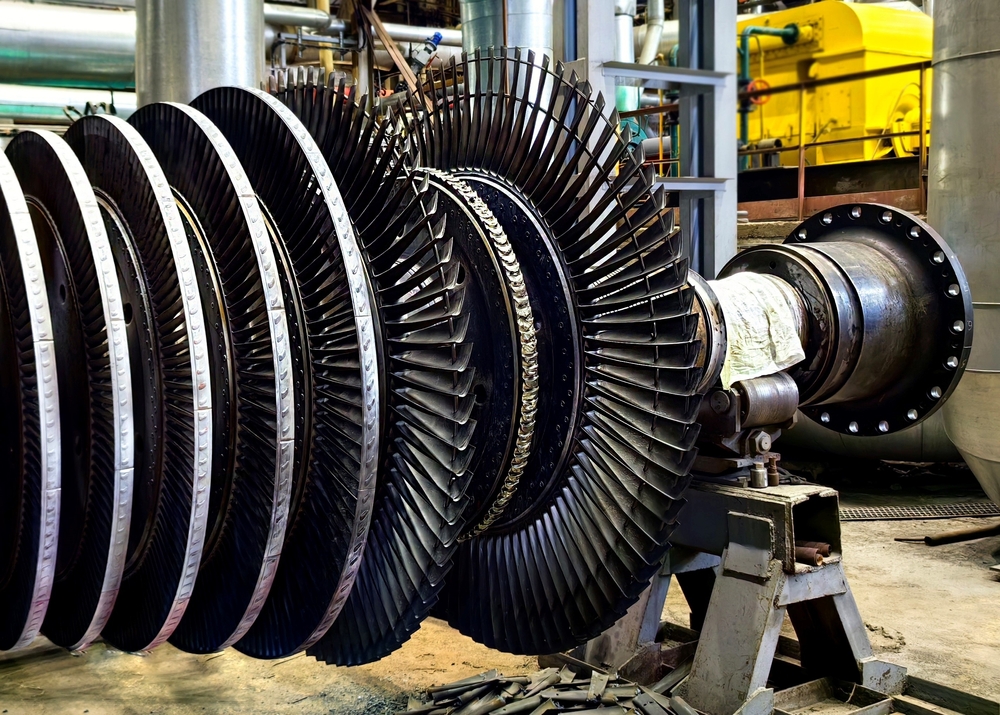
This is not a new line of business for us. Gas turbine and generator work accounts for the largest share of our delivered projects — overhauls, rotor rewinding, partial discharge monitoring, hot gas path inspection and parts refurbishment carried out on live plant at thirteen power stations across Malaysia.
That work spans heavy-duty gas turbine and generator fleets from the major international OEMs, for clients including Tenaga Nasional Berhad, Powertek, Pahlawan Power, Panglima Power and Kapar Energy Ventures.
See the generation project recordEvery power island is sized to a specific site. If you are developing a data centre campus and assessing on-site generation, these are the four things we need in order to say something useful.
IT load and total site load in MW, the redundancy standard you are designing to, and whether capacity is needed in one step or in phases.
When power is needed on site, and whether this is permanent generation or bridging power pending a grid connection.
Gas supply at or near the site, pipeline capacity and pressure, LNG options, and whether dual-fuel or liquid backup is required.
Location, available footprint, intended voltage level, and the status of any utility connection application already in progress.
Send us your capacity requirement and target date, and we will come back on feasible turbine packages.